

When to Visit an Emergency Dentist in Nashville: Key Reasons Explained
By Greenwood Local Dentistry in
Blog
09/04/2026
Life in a vibrant community like Nashville moves quickly—between work, family, music, and everyday routines, dental concerns can sometimes be pushed aside. But certain oral health issues aren’t meant to wait. Knowing when to act can make the difference between saving a tooth and facing a more complex problem.
Many patients delay care, hoping discomfort will pass. In reality, dental emergencies often worsen quietly before becoming painful or costly. Understanding the warning signs helps you make confident, timely decisions for your health and your family’s well-being.
If you’ve ever wondered whether your situation is “serious enough,” this guide will help you recognize when it’s time to visit an Emergency Dentist Nashville—and why acting early matters.
Understanding What Counts as a Dental Emergency
Not every dental issue requires immediate care, but some situations need prompt attention to prevent long-term damage.
A dental emergency typically involves:
- Severe pain
- Active bleeding
- Trauma to teeth or gums
- Signs of infection
These issues can interfere with eating, speaking, and even sleeping. More importantly, untreated infections can affect overall health, not just your smile.
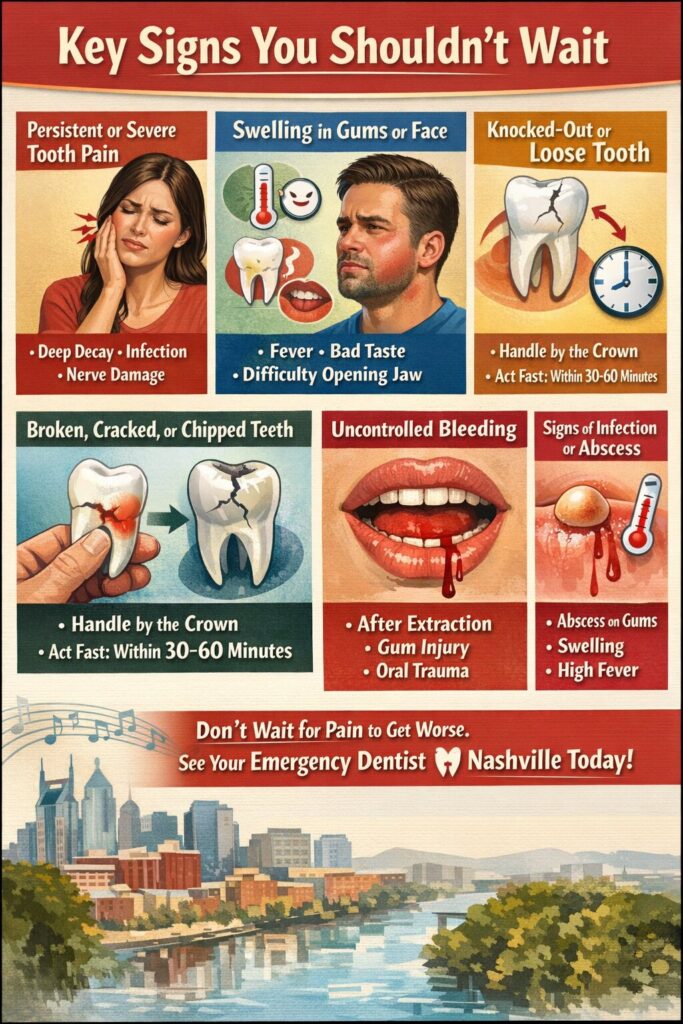
Key Signs You Shouldn’t Wait
1. Persistent or Severe Tooth Pain
Toothaches don’t always go away on their own. Pain that lingers or intensifies may indicate:
- Deep decay
- Infection
- Nerve damage
If the pain disrupts your daily routine or sleep, it’s your body’s way of asking for immediate care.
2. Swelling in the Gums or Face
Swelling is often a sign of infection, especially when accompanied by:
- Fever
- Bad taste in the mouth
- Difficulty opening your jaw
In Nashville’s busy lifestyle, it’s easy to overlook mild swelling. But infections can spread quickly if untreated, making early intervention essential.
3. Knocked-Out or Loose Tooth
Whether from a sports injury, a fall, or an accident, a knocked-out tooth is time-sensitive.
What to do immediately:
- Handle the tooth by the crown (not the root)
- Rinse gently if dirty
- Try to place it back in the socket if possible
- Seek care within 30–60 minutes
Quick action can often save the tooth.
4. Broken, Cracked, or Chipped Teeth
Even minor cracks can expose the inner layers of the tooth, leading to:
- Sensitivity
- Infection
- Structural damage
In a city like Nashville—where outdoor activities, sports, and active lifestyles are common—these injuries happen more often than you might expect.
5. Uncontrolled Bleeding
Bleeding that doesn’t stop after:
- A tooth extraction
- Injury to the gums
- Oral trauma
…requires urgent attention. Healthy gums shouldn’t bleed excessively, and ongoing bleeding could indicate a deeper issue.
6. Signs of Infection or Abscess
A dental abscess is a serious condition that may appear as:
- A pimple-like bump on the gums
- Severe pain
- Swelling
- Fever
Left untreated, infections can spread beyond the mouth. Seeking care from an Emergency Dentist Nashville at this stage is critical for both oral and overall health.
Why Timely Care Matters
Delaying treatment can lead to:
- Increased pain and discomfort
- More complex and costly procedures
- Permanent tooth loss
- Spread of infection
Think of emergency dental care as a way to protect not just your smile, but your long-term health. Early care is often simpler, less invasive, and more effective.
A Local Perspective: Nashville Lifestyles and Dental Emergencies
Nashville’s energy is part of what makes it special—from live music events to family outings and community sports leagues. But with an active lifestyle comes a higher chance of unexpected dental injuries.
Late-night discomfort after a downtown outing, a chipped tooth during a weekend game, or sudden swelling before a workday—these are real scenarios many residents face.
Having a trusted local dental team means you don’t have to navigate these moments alone.
What to Expect During an Emergency Visit
Many patients feel anxious about urgent dental care. Knowing what to expect can ease that concern.
During your visit, your dentist will:
- Assess your symptoms and medical history
- Take necessary imaging (if required)
- Provide immediate pain relief
- Recommend and begin appropriate treatment
The focus is always on stabilizing your condition first, then creating a plan for long-term care.
Source: Jackson Family Dentistry
How to Reduce the Risk of Dental Emergencies
While not all emergencies are preventable, simple habits can lower your risk:
- Wear a mouthguard during sports
- Avoid chewing hard objects like ice
- Maintain regular dental checkups
- Address minor issues before they worsen
Prevention is a form of care that supports long-term balance and health.
Common Patient Questions
How do I know if my toothache is serious?
If the pain lasts more than a day, worsens, or comes with swelling or fever, it’s best to seek care promptly.
Can a chipped tooth wait a few days?
Small chips may not seem urgent, but they can worsen over time. It’s safer to have them evaluated early.
What should I do if my tooth gets knocked out?
Keep the tooth moist (preferably in milk or saliva) and seek dental care immediately—timing is critical.
Is swelling always an emergency?
Not always, but swelling with pain, fever, or difficulty swallowing should be treated as urgent.
Can I go to the ER for a dental emergency?
Emergency rooms can help with pain and infection temporarily, but a dentist provides the specialized care needed to treat the root cause.
Will emergency treatment be painful?
Modern dentistry focuses on comfort. Most procedures are designed to relieve pain, not cause it.
A Calm, Trusted Approach to Urgent Care
Dental emergencies can be stressful, especially when they strike without warning and disrupt your daily routine. The good news is that with prompt, professional care, most urgent dental issues can be handled quickly and effectively—helping you get back to comfort and normalcy sooner than you might expect.
At Greenwood Local Dentistry and Orthodontics, patient comfort and clarity come first. From sudden tooth pain to unexpected injuries, the team is committed to providing gentle, reliable care while keeping you informed every step of the way. With a focus on both immediate relief and long-term oral health, you can feel confident knowing you’re in trusted hands.
Don’t put your health on hold—schedule your appointment today and get the care you deserve.